

Parliament speech highlights closer ties between middle powers
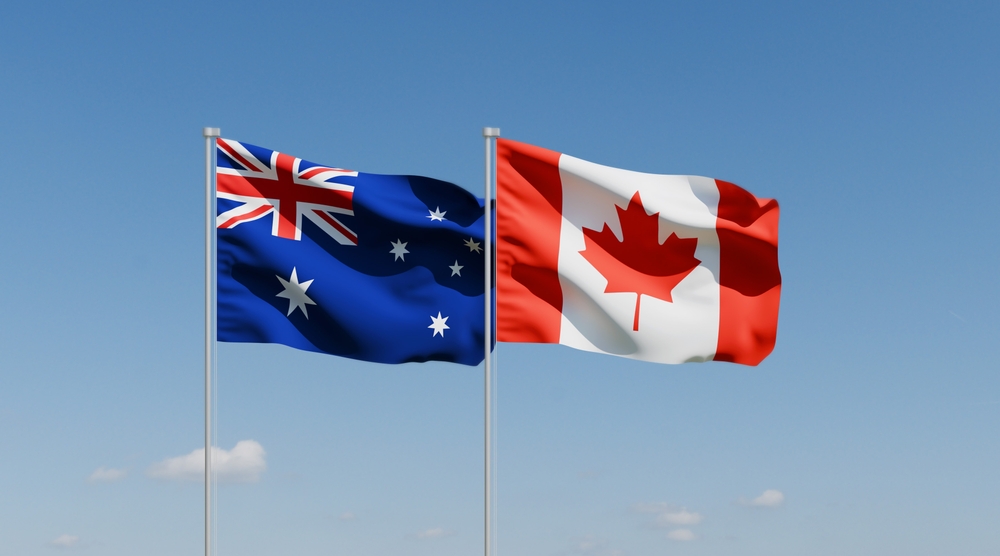
Australia and Canada said on Thursday they signed new agreements on critical minerals as Canadian Prime Minister Mark Carney delivered a major address to the Australian parliament, a signal of closer coordination between what both leaders described as middle powers. Carney is traveling across the Asia-Pacific with stops that also include Japan and India, and his appearance in Canberra marked the first time a Canadian leader has addressed Australia’s parliament since 2007.
Carney cast the relationship as a strategic response to growing geopolitical competition. “In a world of great power rivalry, middle powers have a choice: compete for favour or combine for strength,” he told lawmakers.
Australian Prime Minister Anthony Albanese introduced Carney in parliament and said the visit reflected deepening ties. He said Australia and Canada cannot reverse global change but can support their citizens and strengthen each other’s position as the international environment shifts.
G7 production alliance aims to diversify supply away from China
Albanese said Australia will join Canada’s G7 critical minerals production alliance, a Canada-led initiative designed to diversify and secure global critical minerals production and supply. He said the two countries agreed to broaden cooperation and build on a joint declaration of intent on critical minerals signed last year.
Western governments have been seeking to reduce reliance on China, which continues to control the majority of production and processing for many critical minerals used in semiconductors and defense applications. The alliance structure is intended to strengthen resilience by coordinating among producer nations and aligning policy support with supply chain security goals.
Producer strength spans lithium, uranium and iron ore
Canada and Australia together account for about one-third of global lithium and uranium production, and more than 40% of global iron ore, according to the figures cited. That scale positions the partnership as a potential anchor for supply diversification efforts, particularly as governments and manufacturers seek more predictable access to raw materials amid geopolitical friction.
Canada’s Energy and Mining Minister Tim Hodgson told Reuters on Tuesday that Ottawa believes a production alliance or buyers’ club is a stronger tool for dealing with concentrated supply than a price floor alone, reflecting a preference for structural coordination over purely market-based mechanisms.
Stockpiles align as Australia commits 1.2 billion Australian dollars
Australia has already allocated A$1.2 billion, or about $850 million, to build a critical minerals stockpile, beginning with antimony, gallium and rare earths. Albanese said the program will now be aligned more closely with Canada’s defense stockpiling regime, which has a similar objective of ensuring access during disruption or strategic stress.
Australian Resources Minister Madeleine King said ahead of Carney’s visit that producer nations such as Australia and Canada have meaningful scope to do more together on critical minerals, reflecting their shared position as large suppliers to global markets.
Cooperation expands into defense, maritime security and AI
Beyond minerals, both leaders said they will deepen collaboration in defense and maritime security, trade, and artificial intelligence. The broader agenda links resource policy to national security planning, reflecting how critical minerals have become central to industrial strategy and defense readiness.
The agreements and Carney’s parliamentary address highlight a push to translate shared resource advantages into coordinated policy, with Australia’s entry into the Canada-led G7 framework signaling tighter alignment among supplier countries seeking to reshape global critical minerals supply chains.