

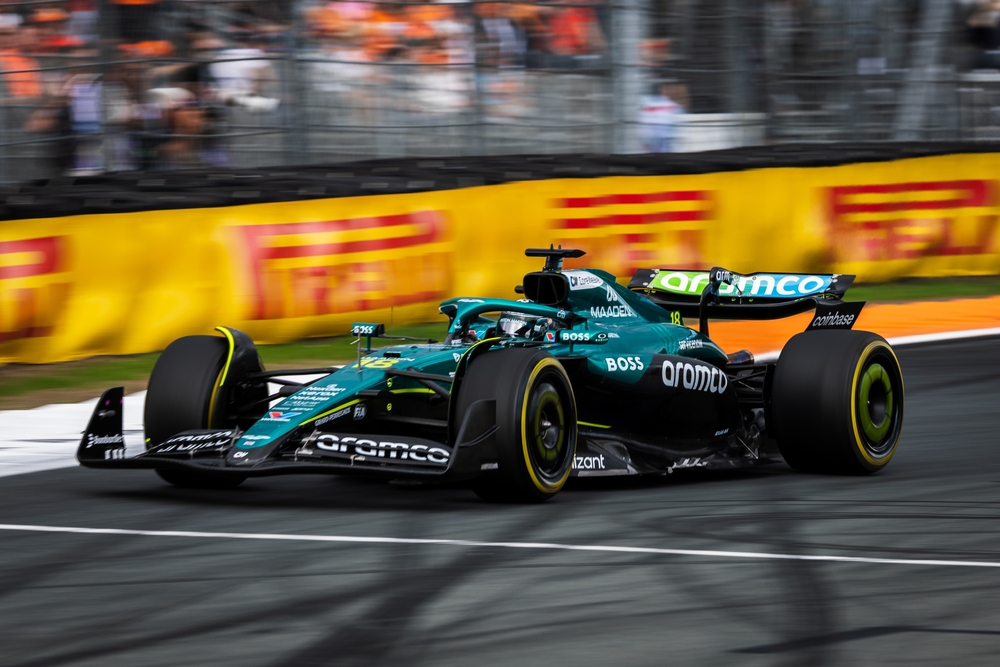
Battery shortages raise risk of DNS for both cars
Aston Martin’s new works partnership with Honda has opened the season under acute stress after early running in Australia exposed reliability and safety concerns tied to the hybrid power unit. After the first day of practice at the opening round, the team said it was operating with only one usable battery per car for the rest of the weekend, leaving little margin for error ahead of Sunday’s 58 lap grand prix.
The immediate risk is procedural and blunt: another battery failure during final practice, qualifying or the race could leave a car unable to continue through the remainder of the event. Team leadership said fresh stock could not be flown in because there were no spare batteries available at the supplier to ship. The situation is especially sensitive because Formula 1 regulations limit each car to two batteries per season, a cost saving rule that turns early attrition into a strategic emergency rather than an inconvenience.
While the number of batteries has become the headline constraint, Aston Martin has pointed to a deeper engineering problem that makes failures more likely. The team believes severe vibrations from the power unit are stressing components and amplifying reliability issues, turning a standard consumable part into a potential single point of failure for an entire weekend.
Vibrations link power unit to reliability and driver safety
According to Aston Martin, the root concern is not confined to electronics. The vibrations appear to originate within the power unit system and are being transmitted into the chassis, creating knock-on effects across the car. The team cited a range of mechanical symptoms consistent with sustained resonance, from parts coming loose to repeated hardware issues that force engineers to spend time on fixes rather than performance work.
More serious is the potential impact on the drivers. Aston Martin said the vibrations are reaching the cockpit in a way that affects the hands, with both Fernando Alonso and Lance Stroll reporting limits on how long they feel they can drive consecutively without risking lasting nerve problems. In practical terms, the team is being pushed toward shorter stints, more cautious running plans and reduced low fuel sessions, all of which constrain the ability to optimize setup and evaluate qualifying pace.
The team has also described a feedback loop that complicates development work. Lower fuel loads can help reveal outright performance, but fuel also dampens vibration in the battery area, so the desire to learn more about the chassis collides with the need to protect the power unit’s most vulnerable parts. In a season opener, that trade-off is costly: it reduces mileage, shrinks the data set and leaves engineers guessing about the true potential of the package.
Stopgap countermeasures buy time, not a quick fix
Honda brought a countermeasure developed on its dynamometer in Japan with the goal of reducing the vibration transmitted into the battery. An additional issue surfaced early in track running involving communication between the battery and its management system, which contributed to the loss of further units and tightened the battery inventory even more. Later practice, however, produced enough laps for Honda to say the track data supported the effectiveness of the countermeasure in reducing vibration at the battery level.
Even if that protection strategy holds over race distance, both sides have signaled that resolving the underlying vibration source will take longer. Aston Martin has said the problem is likely tied to fundamental balancing and damping work within the power unit system, the kind of engineering that typically requires iterative testing, component redesign and careful validation. That points to a timeline measured in weeks or months rather than days.
The operational burden is already visible. Mechanics have been working deep into the night to keep the cars running and preserve limited hardware, and the team has had to prioritize survivability over speed. That may leave Aston Martin effectively blind on performance for the opening weekend, even with one of the grid’s best-funded structures and high-profile technical leadership in place.
Honda reset and cost cap era frame the setback
The situation looks especially stark given Honda’s recent record as an engine supplier, including multiple championship seasons under the previous regulation cycle. Aston Martin chose a works deal precisely to gain a long-term edge from integrated development and dedicated support. Instead, the season has started with a crisis that exposes how much institutional continuity matters in modern Formula 1 power unit programs.
Aston Martin has indicated it learned late in the process that Honda’s current power unit group is materially different from the team that delivered its earlier successes. Honda had stepped back from Formula 1 at the end of 2021, continued supplying engines under a development freeze through 2025, then reversed course toward the end of 2022 as the 2026 rules took shape. By the time that return solidified, rivals and new entrants had already been working on the next cycle. Honda also faced the power unit budget cap environment that limits spending flexibility during catch-up phases.
In the near term, the partnership’s priority is straightforward: stabilize the vibration issue enough to run reliably and protect drivers. Beyond that, the team expects Honda to pursue performance gains in the combustion engine, while also ramping work on future engines that may require a sizeable step in output. For now, Australia has turned into a stress test of collaboration and crisis management rather than a showcase of a new alliance.