

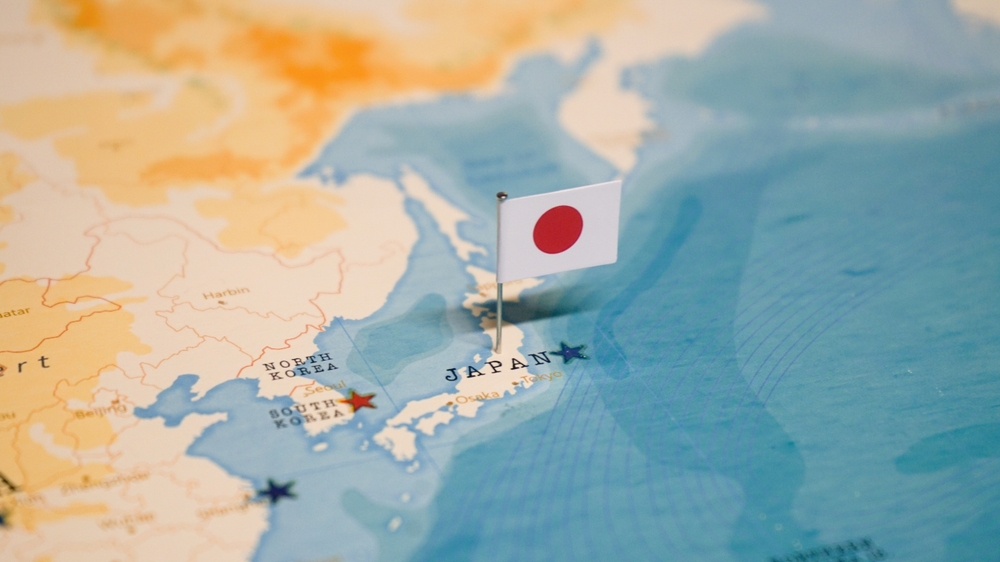
February rebound masks pressure from oil and tariffs
Japan moved back into trade surplus in February, a modest improvement that offers some relief after the sharp deficit recorded a month earlier. But the recovery came with clear warning signs. Imports accelerated strongly, exports remained uneven across major markets and the outlook is becoming more fragile as the conflict involving Iran pushes up energy prices for one of the world’s most import-dependent advanced economies.
Preliminary government data showed Japan posted a trade surplus of 57.3 billion yen in February, reversing the 1.15 trillion yen deficit recorded in January. Exports rose 4.2 percent from a year earlier to 9.57 trillion yen, beating expectations, while imports climbed 10.2 percent to 9.51 trillion yen. The result suggests external demand remains resilient enough to support trade performance, but it also shows how quickly higher import costs can erode that support.
The rebound therefore does not amount to a clean improvement in Japan’s external position. It reflects a country still benefiting from demand in parts of Asia and Europe, while becoming more exposed to rising energy bills, US trade pressure and currency weakness.
Energy dependence leaves Japan vulnerable to the Iran war
The most immediate concern is the cost of imports. Japan relies on foreign suppliers for almost all of its oil, which makes the country especially sensitive to any disruption in global energy routes. With the Strait of Hormuz effectively constrained by the war and Brent crude trading around $100 a barrel, the risk is that February’s import growth could be only the beginning of a more expensive period for the trade account.
That exposure matters because higher energy prices do not stay confined to customs data. They feed into transport costs, industrial production and household spending, creating pressure across the wider economy. For Japan, which has spent years trying to escape weak growth and low inflation without damaging domestic demand, a prolonged oil shock raises the uncomfortable possibility of imported inflation without a corresponding lift in economic momentum.
The situation is especially difficult because Japan cannot easily offset that pressure through domestic supply. Unlike economies with large energy resources, it must absorb price changes from abroad. That makes the current geopolitical environment more than a headline risk. It is a direct economic constraint.
Exports show resilience, but key markets are softening
On the export side, the picture was mixed rather than uniformly strong. The overall increase of 4.2 percent suggests Japanese manufacturers and exporters are still finding demand, yet the regional breakdown points to clear weakness in two of the country’s most important markets. Shipments to China fell 10.9 percent from a year earlier, though that drop may have been distorted by the timing of Lunar New Year holidays falling in February this year.
Exports to the United States also declined, falling 8 percent as auto shipments weakened. That drop reflects a more structural challenge. President Donald Trump’s tariffs on Japanese autos, now set at 15 percent, are continuing to weigh on one of Japan’s most important export industries and on the wider supply network tied to it. For an economy where automakers remain central to industrial confidence, employment and exports, that pressure is difficult to dismiss as temporary noise.
There were brighter spots elsewhere. Exports to Europe rose 17 percent, while shipments to the rest of Asia increased 2.8 percent. Those gains helped offset weakness in China and the United States and suggest Japan still has pockets of external resilience. But the overall balance is becoming less comfortable, with growth in some markets increasingly compensating for visible deterioration in others.
BOJ and politics now shape the next market test
Investors are now looking beyond the trade figures to the Bank of Japan, whose policy board is due to conclude its two-day meeting on Thursday. The central bank is expected to keep interest rates unchanged for now, but the backdrop is becoming more complicated. Rising oil prices threaten to push inflation higher, while the weak yen adds to import costs even as it provides some support for exporters. The dollar has been trading near 159 yen, compared with levels below 150 yen a year ago, highlighting the scale of the currency shift.
That leaves the BOJ in a familiar but difficult position. A weaker yen can help trade competitiveness, yet it also amplifies the cost of imported fuel and raw materials. If elevated oil prices prove persistent rather than temporary, central banks globally may have to lean less dovish than markets had expected. For Japan, that question is especially sensitive because the economy still relies heavily on easy financial conditions even as inflation risks become harder to ignore.
Politics could add another layer of uncertainty. Investors are also watching for what may emerge from the summit later this week between Trump and Prime Minister Sanae Takaichi. Trade, energy security and broader strategic alignment are all in focus. February’s return to surplus may offer Japan a brief statistical improvement, but the broader message is that the country’s external position is entering a more demanding phase, shaped by oil, tariffs, exchange rates and a fast-changing geopolitical backdrop.