

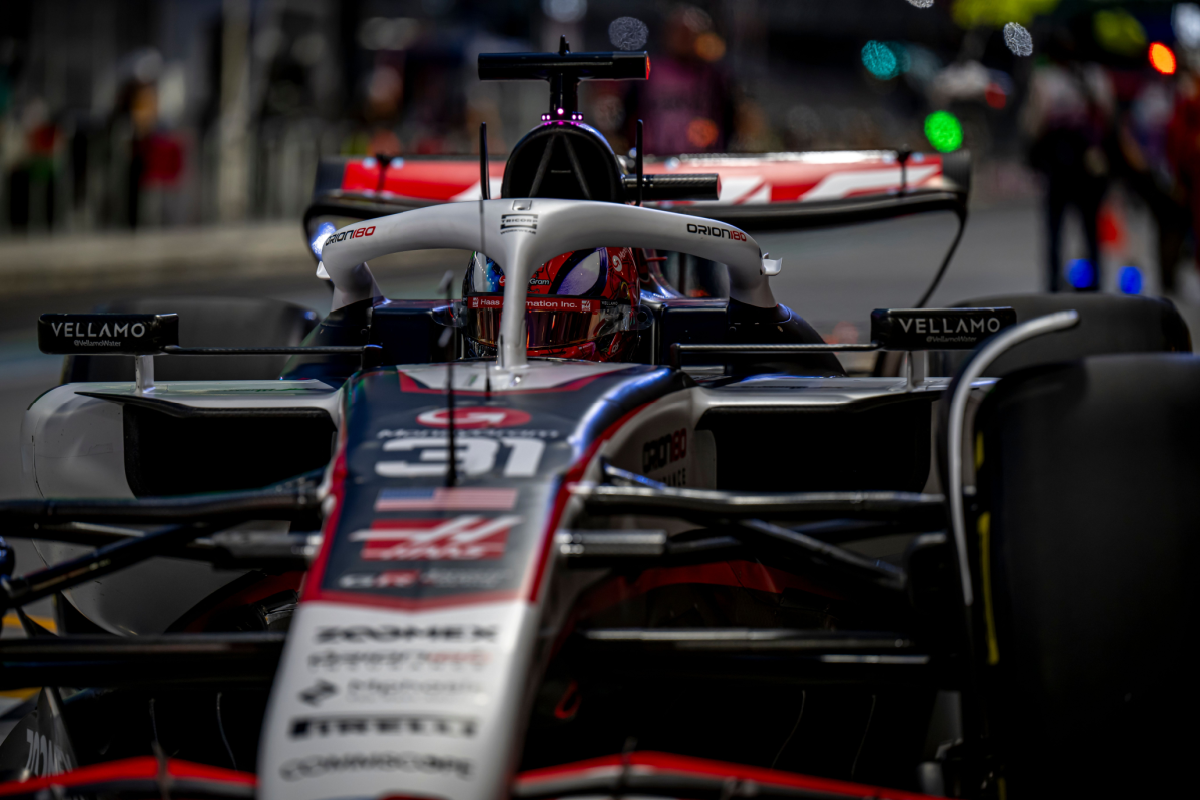
VF26 offers first glimpse of radical new era
Haas has become the first Formula 1 team to reveal the design of its 2026 challenger, releasing digital renders of the VF26 ahead of a season shaped by the biggest regulation overhaul in decades. The new rules introduce smaller, narrower cars and a fundamentally different aerodynamic philosophy compared with previous generations.
The VF26 immediately reflects those changes, most notably through a much narrower front wing and the presence of a fin on the engine cover. Similar features were also spotted on the new Cadillac Formula 1 car, which completed its first private test at Silverstone last week, reinforcing early design trends emerging across the grid.
New regulations reshape cars and power units
The 2026 regulations overhaul both chassis and power units. While engines remain 1.6-litre V6 turbo hybrids, electrical components now play a far greater role in performance. Energy deployment and recovery are central to lap time, with electric power accounting for up to 50% of total output.
All engines must also run on fully sustainable fuels derived from waste biomass or synthetic industrial processes. The increased electrical power brings major challenges, as teams will struggle to recover enough energy during a lap, leading to frequent battery depletion and recharge cycles.
Energy management a critical challenge
Haas team principal Ayao Komatsu said the scale of the rule changes presents a major test, particularly for smaller teams. He highlighted energy management as one of the biggest unknowns heading into testing, noting that teams are still discovering what is realistically achievable over single laps and full race distances.
According to Komatsu, aerodynamic development remains wide open, with rapid progress expected once cars hit the track. He anticipates that an early pecking order could form within the first few races, though it may shift significantly as teams learn and adapt.
Testing schedule and season launch
Teams will reveal their 2026 cars individually over the coming weeks before public pre-season testing begins in Bahrain from 11 to 13 February, followed by a second test from 18 to 20 February. A private, closed test will also take place in Barcelona at the end of January.
The 2026 Formula 1 season begins with the Australian Grand Prix in Melbourne from 6 to 8 March, marking the first competitive outing for the radically redesigned cars.
Drivers brace for unpredictable season
British driver Oliver Bearman, entering his second Formula 1 season alongside Esteban Ocon, described the changes as the biggest in the sport’s history. He expects early races to be shaped heavily by reliability, with mistakes and technical issues likely as teams adjust to the new systems.
The VF26 also features a revised livery reflecting Haas’ strengthened relationship with Toyota, incorporating more white and red into the design. While performance remains unknown, Haas’ early reveal sets the stage for what is expected to be one of the most dynamic and unpredictable seasons in Formula 1 history.