

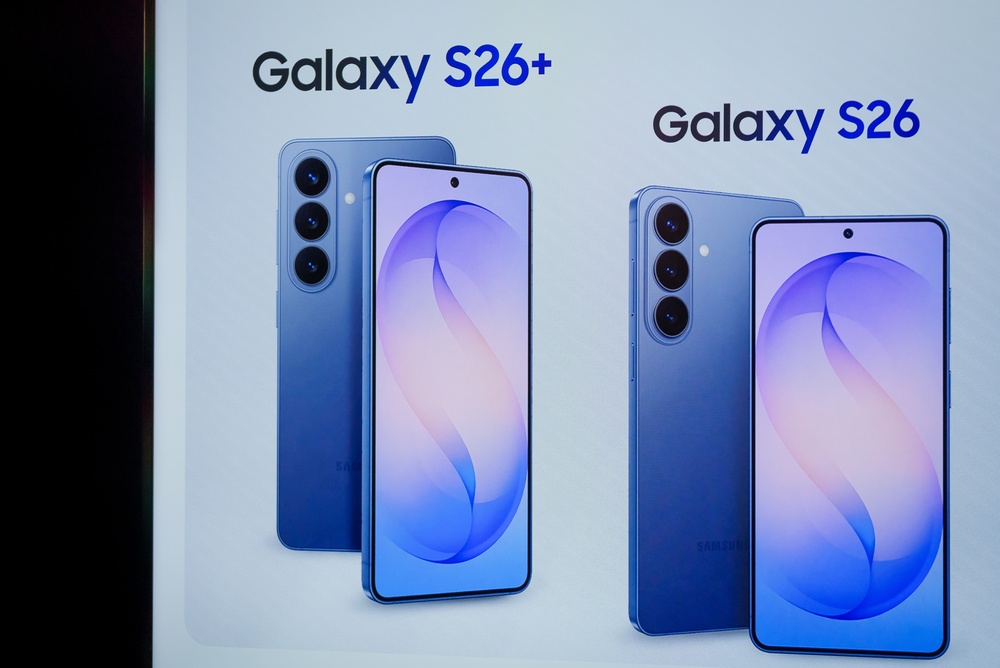
Samsung updates its flagship with a new screen feature
Samsung has opened its 2026 flagship cycle with a familiar strategy: refine the top model, expand its software ambitions and add one feature designed to stand apart in a crowded premium market. The Galaxy S26 Ultra enters at the high end of the smartphone segment with a starting price of £1,279, positioning itself against Apple and Google while leaning heavily on display technology, camera flexibility and long-term software support.
The most distinctive addition is a built-in privacy mode for the 6.9in display. When activated, the screen narrows its visibility so that people viewing from the side have far less chance of reading messages, checking banking details or seeing notifications. Privacy screens have long existed in laptops and as aftermarket phone accessories, but Samsung is presenting this as the first time the function has been integrated directly into a smartphone display. Users can switch it on from quick settings, choose between two levels of strength and limit it to certain activities such as unlocking the device or using sensitive apps.
That feature arrives alongside a hardware refresh that is more evolutionary than radical. Samsung has softened the hard-edged look of earlier Ultra models, making the phone visually closer to the rest of the S26 line. It is slightly lighter and thinner than its predecessor, though still firmly in oversized territory. The result is a device that remains aimed at buyers who want a large-screen productivity phone rather than a compact daily carry.
Hardware focus remains on performance, battery and scale
The Galaxy S26 Ultra runs on a customised version of Qualcomm’s Snapdragon 8 Elite Gen 5 for Galaxy, supported by 12GB or 16GB of RAM and storage options from 256GB to 1TB. On paper and in daily use, the phone is built for demanding workloads. Gaming, multitasking and high-resolution media editing are central to the pitch, and the large QHD+ Dynamic Amoled 2X panel with a 120Hz refresh rate reinforces that positioning.
Battery performance also appears to be one of the device’s stronger selling points. Samsung’s latest Ultra is described as capable of lasting around two days between charges under varied use across wifi and 5G, with around eight hours of active screen time. That level of endurance matters in the premium segment, where buyers expect performance gains without sacrificing stamina. Fast processing, strong battery life and a bright large-format display help preserve the Ultra’s identity as a productivity and entertainment device first, not just a camera phone.
The design does involve trade-offs. Samsung has moved away from titanium and returned to aluminium sides, a change that keeps the finish premium but may leave the frame more prone to visible wear. The large rear camera housing also remains pronounced, making the handset visually and physically substantial. At 214g, it is lighter than the prior model, but this remains a two-handed phone for many everyday tasks.
AI expands, but the practical gains are uneven
Samsung is also using the S26 Ultra to deepen its artificial intelligence strategy. The phone ships with One UI 8.5 based on Android 16 and includes access to three built-in chatbot options: Google Gemini, Samsung’s revised Bixby and Perplexity. This creates breadth, but not necessarily clarity. The company is offering users multiple conversational tools, yet the practical differences between them may be difficult to justify in day-to-day use.
Some AI features appear more useful than others. Transcription, image editing and text assistance are positioned as mature tools rather than novelty additions, while call screening can answer suspected spam calls and ask the caller to identify their purpose. Samsung’s more forward-looking AI feature is Now Nudge, which draws information from apps and surfaces suggestions during messaging. It can recommend photos, events, locations or other content based on context. The concept points toward a more proactive assistant model, though it is still described as less capable than comparable systems from Google.
Bixby has been improved in device control, particularly for settings and actions carried out on the phone itself, but some queries are still routed elsewhere. That raises a broader question for Samsung’s software strategy: whether expanding AI options creates meaningful utility or simply more overlap. For now, the company’s software edge appears stronger in support duration than in AI differentiation, with updates promised until 28 February 2033.
Camera gains and pricing reinforce the flagship formula
Photography remains central to the Ultra brand. The S26 Ultra carries a four-camera setup on the rear, led by a 200MP main sensor, supported by ultra-wide and telephoto options that extend its range beyond many rivals. Samsung says upgraded lenses on the main and 5x telephoto cameras allow more light intake, improving low-light results and reducing motion blur. That should matter in practical use, where smartphone buyers increasingly judge cameras on nighttime scenes, portraits and video stability rather than headline megapixel counts alone.
The 5x telephoto appears to be one of the more meaningful improvements, particularly for portrait depth and natural background separation. The 3x telephoto is described as the weakest part of the camera array, but the overall system still delivers wide flexibility from ultra-wide to long zoom. Video remains another area of strength, with stabilisation features that approach action-camera style smoothness, even if that sometimes comes with a drop in image quality when the ultra-wide lens is used.
At £1,279, the S26 Ultra sits above the standard Galaxy S26 and ahead of direct flagship rivals such as the Google Pixel 10 Pro XL and Apple iPhone 17 Pro Max in some markets. That pricing leaves little room for impulse buying. Samsung is selling the device as the most complete Android handset available, with a stylus, long battery life, extensive camera reach and a privacy-focused display feature that few competitors currently match. For owners of recent high-end phones, the changes may look incremental. For buyers entering the premium tier or upgrading from older devices, the S26 Ultra appears designed to strengthen Samsung’s hold on the ultra-flagship segment rather than redefine it.