

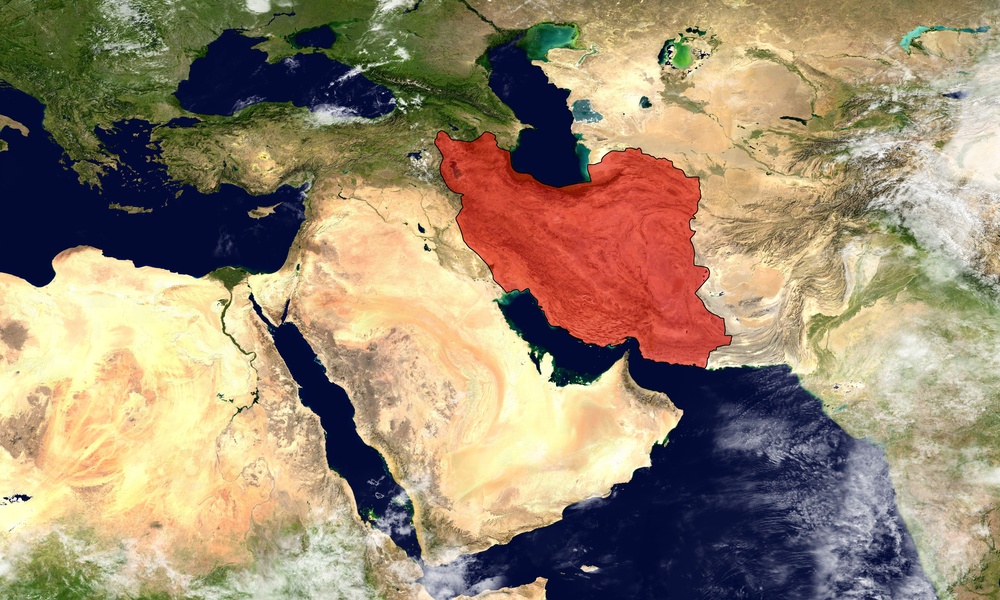
More than 40 countries launched a new international coalition on Thursday to prepare for the reopening of the Strait of Hormuz once the most intense phase of the war involving the United States, Israel, and Iran comes to an end. The initiative reflects the growing pressure on governments worldwide to respond to the economic shock created by the near closure of one of the most important shipping routes on the planet.
The group was convened virtually by British Foreign Secretary Yvette Cooper and brought together countries from multiple regions, underlining how widely the consequences of the disruption are now being felt. With thousands of ships trapped and energy, shipping, and commodity markets under strain, the meeting marked an attempt to organize a coordinated response before the conflict moves into a postwar phase.
The effort also has a clear political dimension. President Donald Trump has been pressing allies, especially in Europe, to take a greater role in restoring passage through Hormuz, arguing that countries dependent on Middle Eastern oil and gas should lead the operation. The United States did not take part in Thursday’s meeting, making the coalition as notable for who was absent as for who joined.
Diplomatic and economic pressure comes first
In her opening remarks, Cooper said the coalition would work toward the collective use of diplomatic and economic tools to secure what she called a safe and sustained reopening of the strait. Her comments made clear that the immediate emphasis is not on direct military intervention, but on building enough international pressure to force a change in the current situation.
That approach reflects the complexity of the crisis. Iran has effectively turned control over the waterway into a geopolitical lever, using restrictions and tolls to increase pressure on the global economy. According to Cooper, the impact is already being felt across gas markets, jet fuel supply, fertilizer flows, and broader living costs, making the issue far bigger than a maritime dispute.
Possible tools under discussion include additional sanctions on the Iranian regime. The coalition is therefore trying to shape a response that is forceful without immediately crossing into a direct military mission while the conflict remains active.
Military planning is being prepared for later
Alongside the diplomatic track, the coalition is also beginning to examine what a future security operation could look like once the conflict cools. Cooper said military planners would explore how to marshal defense capabilities when conditions allow, including the possibility of demining operations and escorted shipping.
That sequencing is crucial. Governments appear to accept that reopening the strait in the middle of active hostilities would be extraordinarily dangerous. The current strategy therefore aims to create a framework that can be activated after the fighting eases rather than trying to force access immediately in the hottest phase of the war.
Italy, the Netherlands, and the United Arab Emirates also used the meeting to call for a humanitarian corridor to protect the shipment of fertilizers and reduce the risk of a wider food crisis. Their intervention showed that the coalition is not focused only on oil and gas, but also on the broader supply chains that depend on passage through Hormuz.
Europe backs the effort but avoids immediate force
European leaders are clearly trying to present the coalition as a serious international initiative without turning it into a rushed military project. European Union foreign policy chief Kaja Kallas joined the call and said restoring safe, toll free freedom of navigation in the strait was an urgent priority. Her remarks reinforced the EU’s support for diplomatic efforts while avoiding any immediate commitment to armed enforcement.
The tone of the meeting reflected that caution. It was primarily used to assess the situation and consolidate positions rather than take operational decisions, and no joint statement was issued afterward. That suggests governments are still trying to balance urgency with the political and military risks of acting too quickly.
This caution also comes as Bahrain prepares to put forward a United Nations Security Council resolution on protecting commercial shipping through the waterway. If that effort advances, it could create a broader international framework for action, though the language has already become more cautious and more narrowly tailored than some earlier proposals.
Trump’s pressure is meeting resistance in Europe
The coalition’s launch came amid growing pressure from Trump, who has repeatedly said the task of reopening the strait should fall to the countries that rely most on Middle Eastern energy. In a national address on Wednesday, he urged those governments to find the courage to secure the route themselves and suggested the hardest part of the conflict was already over.
That message has not been embraced uniformly by U.S. allies. French President Emmanuel Macron pushed back strongly, arguing that trying to secure the narrow passage by force would be unrealistic and dangerously slow, while also exposing any participating ships to the threat of attacks by the Revolutionary Guards and ballistic missiles. His response captured a broader European concern that the problem cannot simply be solved by sending warships into one of the world’s most militarized waterways.
The coalition therefore reflects a compromise between pressure to act and resistance to an immediate show of force. It is an attempt to build a multinational path toward reopening Hormuz that relies first on diplomacy, economic leverage, and planning, while leaving the hardest military decisions for later. In a crisis that has already shaken global energy and trade, that may be the only politically sustainable way to begin.