

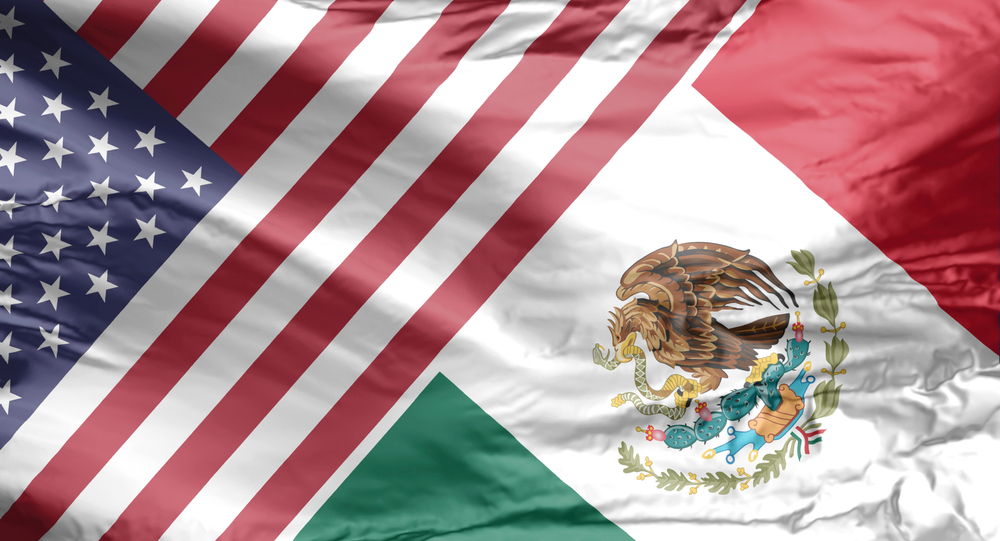
Mexico has opened an investigation into whether its constitution and national security laws were breached after two U.S. embassy officials died in a car crash following a drug lab operation in Chihuahua. The case has quickly become politically sensitive because reports that the two Americans were CIA operatives have raised new questions about the real extent of U.S. involvement in anti-cartel operations on Mexican soil.
The issue is larger than the accident itself. At the center of the controversy is whether local officials in Chihuahua coordinated with U.S. personnel without the required authorization from Mexico’s federal government. If that happened, the fallout could deepen an already tense debate over sovereignty, security cooperation and the limits of American involvement inside Mexico.
That is why the response from President Claudia Sheinbaum has been so firm. Her government is not only trying to clarify who the U.S. officials were and what exactly they were doing. It is also trying to determine whether the operation crossed a legal and political line.
The Crash Has Triggered A Sovereignty Debate
The vehicle carrying the two U.S. officials and two Mexican officials reportedly crashed into a ravine in the mountains of Chihuahua as they were returning from an operation linked to clandestine drug laboratories. What might otherwise have been treated as a tragic accident has instead become a major political issue because of the unanswered questions surrounding the mission itself.
The controversy is not just about the nationality of those involved. It is about whether U.S. agents were participating, even indirectly, in an operation that the federal government says it did not authorize. In Mexico, that is not a technical matter. It goes straight to the issue of national control over security policy and the legal boundaries on foreign participation.
Once those questions surfaced, the crash stopped being only a security story and became a constitutional one.
Conflicting Accounts Have Deepened The Problem
One of the main reasons the incident has escalated so quickly is that the public explanations from officials have not been fully consistent. Early accounts suggested the Americans died while returning from the operation to dismantle clandestine drug labs. Later, local officials appeared to suggest they had not directly taken part and were present more in a training or support role.
That difference matters. If the U.S. officials were only loosely connected and arrived later, the political implications are still serious but somewhat narrower. If they were embedded more directly in the mission, the legal and diplomatic consequences become much more significant.
The uncertainty has therefore become part of the story itself. Until the facts are settled, suspicion is likely to keep growing.
Sheinbaum Is Defending Federal Authority
President Sheinbaum has responded by stressing that neither she nor her cabinet had prior knowledge of the operation. That statement is critical because it places distance between the federal government and whatever arrangements may have been made at the state level.
Her position is clear: there may be coordination and collaboration with the United States, but there are not supposed to be joint operations on the ground without proper federal approval. If the investigation confirms otherwise, she has suggested that sanctions or legal consequences could follow.
This is not only a matter of procedure. It is an assertion of political authority at a moment when Sheinbaum is under pressure to show that cooperation with Washington will not come at the expense of Mexican sovereignty.
The Timing Makes The Incident More Explosive
The accident comes during a highly delicate period in U.S.-Mexico relations. Donald Trump has been pressing Mexico to do more to stop drug trafficking, while Sheinbaum has repeatedly resisted any suggestion that U.S. forces should operate directly inside the country. In that environment, even limited or ambiguous U.S. law enforcement involvement becomes highly charged.
The possibility that CIA personnel were connected to the mission makes the issue even more sensitive. Intelligence support is one thing. Direct operational involvement, or the appearance of it, is something else entirely in Mexico’s political landscape.
That is why this case matters far beyond Chihuahua. It touches one of the most sensitive fault lines in the bilateral relationship.
The CIA Question Changes The Stakes
If the reports are confirmed, the fact that the two Americans were CIA officers would sharpen the political meaning of the case considerably. The CIA has reportedly played a larger role in counter-drug intelligence and regional security efforts since Trump returned to the White House, but there is a major difference between intelligence sharing and active involvement tied to operations on Mexican territory.
That distinction is now under scrutiny. The question is not simply whether the CIA was present in some form, but whether its role remained within the legal and diplomatic limits accepted by Mexico. The answer will shape how this incident is remembered and what kind of political reaction it triggers.
For Sheinbaum, allowing ambiguity on that point would be difficult. She needs clarity both for domestic reasons and for the signal it sends to Washington.
The Investigation Could Reshape Future Cooperation
The most important consequence of the case may be what it does to future U.S.-Mexico security coordination. If federal investigators conclude that state-level authorities worked too closely with U.S. personnel without proper authorization, Mexico may tighten procedures or impose stricter controls on cross-border cooperation.
That could make already complicated anti-cartel efforts even more politically delicate. At the same time, if the investigation finds that the Americans were only providing limited support and that the legal framework was not clearly breached, the case may still leave a residue of mistrust that affects future operations.
Either way, the crash is likely to have consequences beyond the immediate tragedy. It has forced into the open a question that both governments often prefer to manage quietly: where cooperation ends and unacceptable foreign involvement begins.