

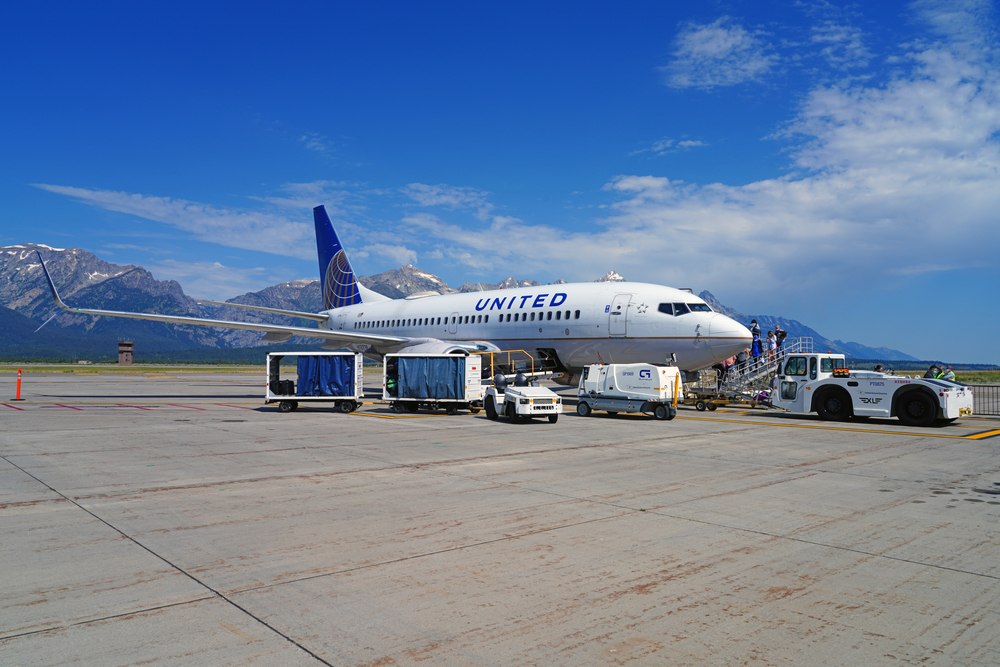
The idea of combining United Airlines and American Airlines may be dramatic enough to excite traders for a day, but it also highlights just how concentrated the US airline industry already is. According to the report, United chief executive Scott Kirby floated the possibility of a tie-up with American to the Trump administration earlier this year, a move that would create the largest airline in the world if it ever became real.
On paper, the proposal is easy to understand. Bigger scale can mean greater control over capacity, stronger pricing power and a more formidable network. In practice, however, the obstacles look enormous. The four biggest US airlines already dominate most domestic flying, and a merger between United and American would create a player with roughly 40% of the domestic market. That is why the idea is being treated less as an imminent transaction and more as a test of how far the current administration might be willing to tolerate consolidation.
The market reaction showed how even a remote possibility can move shares. American rose sharply after the report, but the broader view among analysts remains much more skeptical. The central problem is not whether such a deal would make strategic sense for the airlines. It is whether regulators and the courts would ever allow it.
The scale alone makes the idea explosive
A merger of this size would go far beyond the kind of industry combination that regulators usually examine. It would bring together two of the largest carriers in the country in a market where the top four players already control about 80% of domestic capacity. That level of concentration immediately turns the discussion into an antitrust issue of the highest order.
The concern is obvious. If United and American were allowed to combine, the competitive balance across many routes would change sharply. On some city pairs, the deal could leave travelers with only one or two meaningful airline options. That would create the kind of environment regulators usually fear most: less competition, stronger control over capacity and a greater ability to push fares higher.
This is why so many observers see the proposal as extraordinarily difficult. The problem is not simply its size. It is the degree to which it would reshape the structure of the market in favor of already dominant players.
Analysts see almost no path to approval
The reaction from legal and industry experts has been deeply doubtful. Several analysts and specialists quoted in the source material described the merger idea as something close to impossible under normal antitrust scrutiny. Their reasoning is straightforward. If a deal of this magnitude can pass, then it becomes difficult to imagine what kind of airline merger the government would still be willing to block.
That is what makes the discussion so revealing. It forces the industry to consider whether the rules of the game are changing under the Trump administration. Officials have sounded warmer than previous administrations toward the idea of consolidation, and that has been enough to keep even very ambitious scenarios alive in conversation.
Still, warmth is not the same as approval. Even a friendlier regulatory climate does not erase the reality that a United-American combination would likely trigger an enormous backlash from competitors, consumer groups and antitrust lawyers.
The route overlap problem is massive
One of the clearest practical barriers is route overlap. A merger between the two airlines would create serious concentration problems on hundreds of routes, meaning regulators would almost certainly require major divestitures if the deal were ever seriously pursued. That is where the industrial logic of the merger begins to collide with the legal one.
The more routes the combined company would dominate, the more concessions it would need to make. But the more concessions it makes, the more the strategic value of the deal can begin to erode. A merger that looks powerful in a headline can become much less attractive if the price of regulatory approval is giving up valuable assets, airport positions and route combinations.
This is one reason why giant mergers often look cleaner in theory than in execution. Scale is appealing, but the path to achieving it can become so encumbered that the original logic weakens under scrutiny.
American’s weakness makes the story easier to imagine
The idea of a deal is also fueled by the very different positions of the two companies. United has been performing from a position of relative strength, while American has struggled to keep pace with rivals that have done a better job appealing to higher-spending travelers. Delta and United have captured much of the sector’s profit momentum, while American has looked more vulnerable.
That imbalance makes speculation easier to understand. American brings a huge network and national presence, but it has not extracted as much value from recent industry trends as its strongest rivals. United, by contrast, has grown more confident in its own strategy and has been more aggressive in key competitive markets.
This also adds a layer of personal intrigue. Kirby once worked at American before being fired, and the competition between the two airlines has long had a sharper edge because of that history. A merger conversation therefore carries both industrial logic and symbolic overtones.
The legal backdrop is still very hostile
For all the talk of a more merger-friendly administration, the legal backdrop remains difficult. The airline sector has already seen courts block major combinations and partnerships in recent years, even before considering something as large as United and American. That history matters because it shows judges have not been inclined to wave through airline tie-ups simply because the companies involved claim strategic necessity.
Recent rulings against major airline deals have reinforced the idea that competition still matters intensely in aviation. Consumers are highly sensitive to fares, schedules and route choice, and regulators know that airline consolidation can quickly affect all three. In such an environment, any proposal that appears to reduce competition on a huge scale starts from a position of legal weakness.
That does not mean the idea will vanish. It means that even if politicians are open to hearing it, the burden of proving it would not harm competition would be immense.
For now, it looks more like a signal than a deal
At this stage, the merger idea appears more important as a signal than as a live transaction. It tells investors that the airline industry is still thinking about consolidation, still testing the political environment and still searching for ways to build more pricing power in a sector where scale matters enormously.
But it also reveals the limits of that ambition. Even in an administration seen as more comfortable with big corporate combinations, a United-American merger would likely be one of the hardest deals imaginable to push through. The strategic rationale may be clear. The regulatory path is anything but.
That leaves the market with a familiar conclusion. The headline is dramatic, the stock reaction is real, and the industrial logic is understandable. Yet unless the legal and political environment changes much more than it already has, the idea remains far more plausible as speculation than as an actual merger plan.